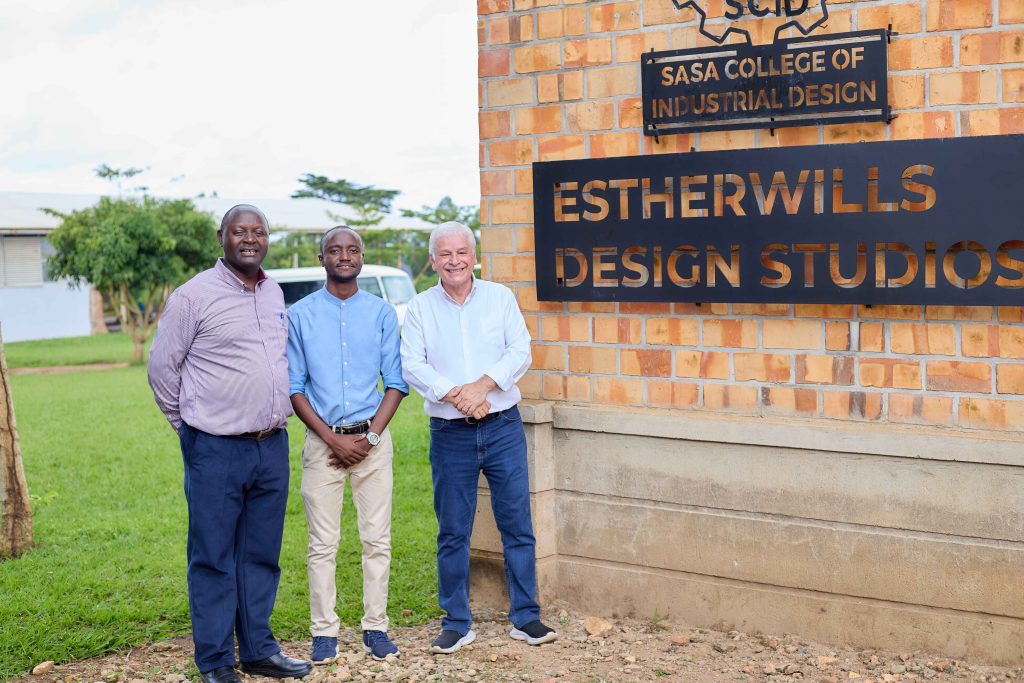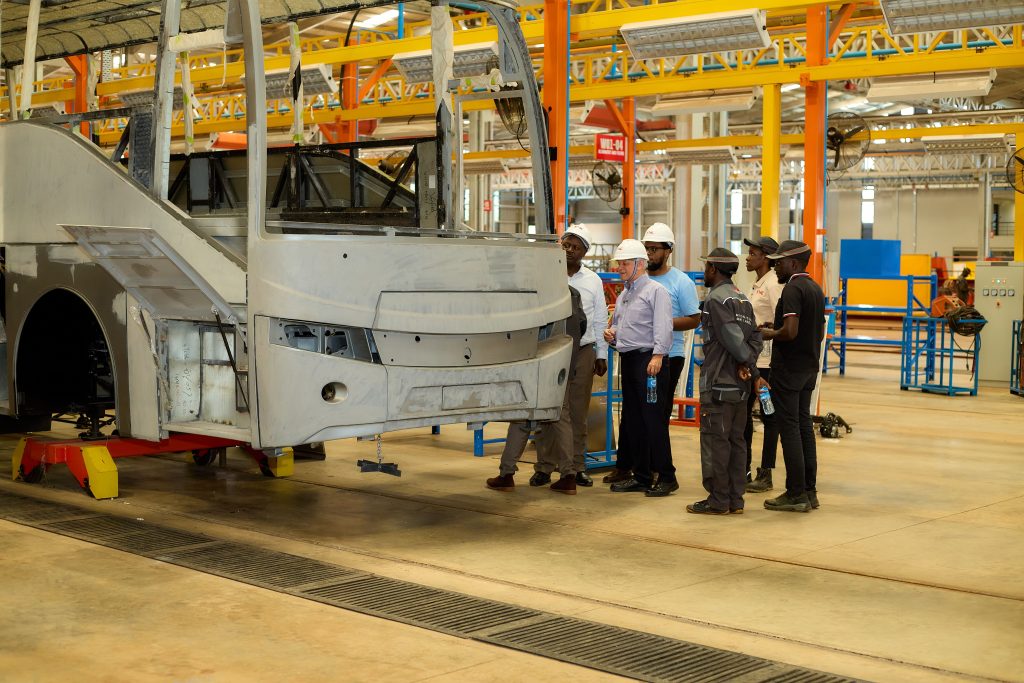

Trainees under the Human Capital Development Programme at SASA College of Industrial Design visited Kiira Motors on Friday, 25 September, to learn about industrial production and explore opportunities for local artisans to supply components to Uganda’s automotive industry.
The visit brought artisans from Katwe into one of Uganda’s largest vehicle assembly environments, giving them an opportunity to observe the production processes, quality standards and professional practices required in industrial manufacturing.
The programme, implemented by SASA College of Industrial Design in partnership with the Science, Technology & Innovation Secretariat (STI Secretariat), is designed to equip local artisans with modern industrial design skills and help them develop products for larger local and international markets.
From the workshop to the factory
Many of the artisans participating in the programme already have practical skills and earn a living from making products in their workshops. However, their ability to grow into larger markets can be limited by gaps in product development, manufacturing processes, quality control and access to industrial supply chains.
The visit to Kira Motors was intended to expose them to what changes when production moves from an individual workshop to an industrial setting.
Kira Motors assembles vehicles but does not manufacture every component locally. Some parts are imported, presenting potential opportunities for Ugandan producers that can develop products that meet the required specifications and quality standards.
The trainees were therefore encouraged to observe the vehicles and consider which components could potentially be produced locally.
For the artisans, the exercise was not only about identifying products they could make. It was also about understanding what would be required to make them consistently, to specification and at a standard suitable for an industrial manufacturer.
Understanding the standards behind industrial production
The visit also exposed the trainees to the professional practices that support industrial production.
Industrial design goes beyond the ability to make a product. It considers how a product is designed, the materials used, how it will be manufactured, how consistently it can be produced and whether it meets the needs and standards of its intended market.
These are some of the areas the Human Capital Development Programme is addressing.
Through practical, hands-on training, SASA College of Industrial Design is working with artisans, particularly those from Katwe, to build on their existing craftsmanship with the fundamentals of modern industrial design.
The aim is to help them develop products that are not only functional, but also suitable for wider markets and capable of being produced at scale.
Creating a link between artisans and industry
For SASA College of Industrial Design and the STI Secretariat, the Kira Motors visit forms part of a broader effort to connect skills development with real opportunities in industry.
Rather than limiting artisans to the markets immediately around their workshops, the programme is encouraging them to consider how their skills can contribute to larger manufacturing systems.
The visit also demonstrated the gap that local producers must close to participate in such supply chains. Meeting an industrial manufacturer’s requirements requires consistent quality, appropriate materials, reliable production processes and professional standards.
The trainees will take these lessons back into their training as they continue developing their skills and products.
The wider objective of the Human Capital Development Programme is to strengthen the capacity of local artisans to move from producing mainly for individual customers to developing high-value, market-ready products for local and international markets.
For artisans who already know how to make, the next step is learning how to design and produce for industry.